
Why Short Positions in China Stocks Just Shrank to A 5-Year Low

Why Short Positions in China Stocks Just Shrank to A 5-Year Low

In recent months, China’s stock market has seen a significant transformation, particularly in short-selling. Short positions in China’s stock market decreased by a third in February 2024, reaching their lowest point in more than three years. This development comes amidst a broader regulatory crackdown aimed at curbing speculation and fostering a sense of stability and confidence among investors.

With the blue-chip CSI300 Index experiencing a near 14% rebound from its five-year lows, the atmosphere is one of cautious optimism, despite the lingering concerns over the country’s economic growth.

Financial Asia / Citing “economic reforms and stability,” Chinese watchdogs banned the brokerages from lending to short-sellers.

Why the Sudden Shrink?

But why the sudden shrink in short positions, and what does it mean for the market and investors alike? At the end of February, the balance of stocks that investors had borrowed to sell short plummeted to 43.5 billion yuan ($6.04 billion), marking a significant drop from the previous month and the lowest level since July 2020, according to data from China Securities Finance Corp.

This trend reflects the Chinese regulators’ determination to create a more equitable trading environment, particularly in a market dominated by retail investors.

Following the regulatory guidance, major brokerages such as CITIC Securities, GF Securities, and China Securities have announced restrictions on short-selling activities.

These moves have sparked a debate among fund managers and investors, with some criticizing the restrictions for hampering their ability to execute certain trading strategies, like the ‘T+0’ intraday trading strategy, which has become nearly impossible under the new regime.

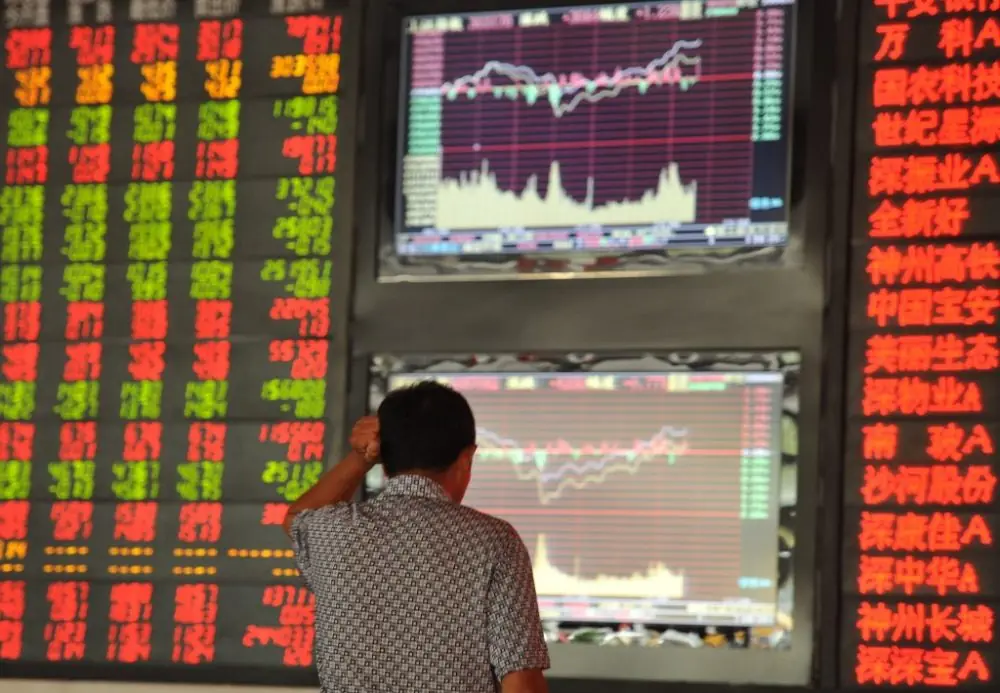
Yan / Unsplash / According to China Securities Finance Corp, short positions are experiencing a massive drop following the suspension by the Chinese government in February 2024.

What Do the Critics Have to Say?

Critics, including Yuan Yuwei of Water Wisdom Asset Management, argue that the crackdown on short-selling could lead to increased market volatility. They believe that both long and short positions contribute to value investment and that regulators should focus on combating market manipulation rather than restricting short sellers.

This debate underscores the delicate balance Chinese regulators must strike between ensuring market efficiency and maintaining fairness, especially as they increase oversight of short-selling, leveraged trades, and high-frequency trading.

However, it is important to note that the reported data does not account for short positions held through derivatives or stock futures. This means the full impact of the regulatory measures on short-selling activities might be more complex than it appears at first glance.

What the CSRC Is Doing to Cope With This

In a bid to rejuvenate the market, the China Securities Regulatory Commission (CSRC) introduced several measures last month. These included suspending brokerages from borrowing shares for lending to short-sellers and banning investors from short-selling stocks bought on the same day. Such measures are part of a broader effort to stabilize the market and boost investor confidence amid concerns over economic growth.
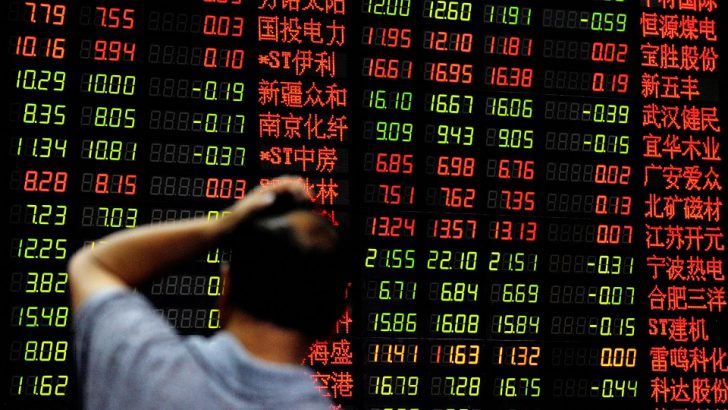
The Finance / If anything, the regulatory crackdown signifies a firm commitment by Chinese authorities to combat speculation and foster a more stable investment environment.

This could lead to a reduction in market volatility and create a more predictable climate for investors, potentially attracting more long-term investment in the process.

So, as we move forward, it will be interesting to see how these regulatory measures play out and whether they will achieve their intended goal of stabilizing the market and promoting healthy economic growth. Needless to say, the debate among investors and fund managers is likely to continue as they navigate these new rules and adjust their strategies accordingly.


You May Also Like

Why U.S. Software Stocks Are Facing Bigger Market Swings Investments

Why U.S. Software Stocks Are Facing Bigger Market Swings

U.S. software stocks have been moving sharply in both directions, creating a difficult market for investors trying to separate business fundamentals from trading activity. Artificial intelligence remains a major source of uncertainty, while momentum strategies, options and leveraged exchange-traded funds are adding force to daily price moves. The result has been a sector where strong […]

Helen Hayward September 11, 2026
Read More →
Microsoft Surges to Biggest Gain Since 2008, Fueling Market Comeback Investments

Microsoft Surges to Biggest Gain Since 2008, Fueling Market Comeback

Microsoft’s strongest stock performance in years helped revive Wall Street after a difficult session, with investors responding positively to signs that the company’s heavy artificial intelligence spending is beginning to generate stronger returns. The rally also lifted major chip companies that had recently faced steep losses. However, confidence remained mixed as the bond market continued […]

Helen Hayward August 14, 2026
Read More →
Understanding the Risks and Rewards of Alternative Investments Investments

Understanding the Risks and Rewards of Alternative Investments

Headlines about private equity, private credit, and other alternative investments often focus on fundraising slowdowns, redemption requests, or market uncertainty. Those reports can raise concerns, especially for financial advisors and individual investors evaluating long-term portfolio decisions. Yet, industry experts argue that headline risk does not always reflect the actual performance or role of alternative investments. […]

Helen Hayward July 17, 2026
Read More →
How the Lehman Formula Works in Investment Banking Commissions Investments

How the Lehman Formula Works in Investment Banking Commissions

Investment banking transactions often involve significant sums of money, complex negotiations, and specialized financial guidance. Because of this, determining advisory fees has always been an important part of investment banking. One of the most recognized fee structures in the industry is the Lehman Formula, a commission model introduced by Lehman Brothers during the 1960s. The […]

Helen Hayward June 25, 2026
Read More →
Ces célébrités et leur patrimoine net – Qui vous surprendra le plus? certaines vérités vous laisseront sans voix … Investments

Ces célébrités et leur patrimoine net – Qui vous surprendra le plus? certaines vérités vous laisseront sans voix …

Roman Polanski – 45 millions de dollars Le réalisateur Roman Polanski est connu pour ses films à succès qui lui a valu de nombreux prix. Aux César 2020, il a encore décroché le titre de meilleur réalisateur pour son film « J’accuse ». Né Raimund Polanski le 18 août 1933 à Paris, le réalisateur Roman Polanski […]

Sven Kramer June 22, 2026
Read More →
Where Is Wealth Management Headed in the Age of AI? Investments

Where Is Wealth Management Headed in the Age of AI?

Artificial intelligence is no longer sitting at the edges of wealth management. It is already part of daily operations, shaping how advisors write, plan, and interact with clients. At a recent Goldman Sachs industry event, leaders highlighted how the technology is moving beyond simple support tasks and starting to influence hiring models, communication styles, and […]

Lilly Thomas May 30, 2026
Read More →